DIY battery projects have a certain appeal. Buy cells, add an inverter, connect a charge controller, and build a system that keeps the fridge or office alive during an outage. For hobbyists, that can be satisfying and educational.
The trouble starts when a project moves from portable backup to the home’s electrical system. At that point, the work is no longer just about batteries. It is about code, utility isolation, fire safety, load control, and long-term reliability.
Where DIY can make sense
DIY can be reasonable for small, isolated loads. A portable power station for a router, laptop, lights, or camping fridge does not require rewriting the home’s electrical design. A small off-grid shed system can also be a good learning project if it follows safe wiring practices.
In those cases, the risk is contained. The battery powers devices plugged directly into it. It does not energize a main panel, interact with utility lines, or start large motor loads.
The U.S. Department of Energy’s Alternative Fuels Data Center notes that charging and electrical equipment must match application, power level, and code requirements. That principle applies beyond EV chargers. Once energy equipment connects to building wiring, the installation environment matters as much as the device.
Where professional design becomes important
Whole-home or partial-home backup is different. The system must disconnect safely from the grid during an outage. It must avoid backfeeding utility lines. It must handle surge loads from motors. It must protect batteries from unsafe operation. It must meet local inspection requirements.
The National Electrical Code includes Article 706 for energy storage systems. UL 9540 is also commonly referenced for energy storage system safety. These standards are not casual reading, but they exist because stationary batteries store a lot of energy and connect to critical infrastructure.
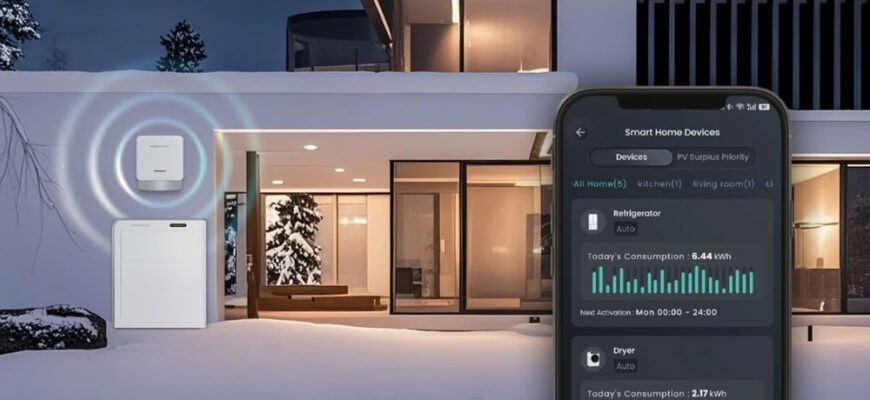
This is where a configurable hybrid inverter becomes valuable. Sigenergy’s Sigen Energy Controller can be configured from 3.8 to 11.5 kW, supports four MPPT inputs, and reaches up to 97.8% efficiency. In a professional installation, that flexibility helps match the inverter to the home’s solar array, battery plan, and backup loads.
The inverter is not just a box
An inverter changes DC electricity from batteries or solar panels into AC electricity used by household circuits. In a hybrid system, it may also manage solar input, battery charging, grid interaction, and backup behavior.
That is a lot of responsibility. If the inverter is poorly matched to the battery or loads, the system may underperform or shut down when it is needed most. If wiring or transfer equipment is wrong, the problem can become dangerous.
DIY videos often focus on battery capacity because it is easy to compare. Professional designers spend just as much time on:
- Circuit selection
- Surge loads
- Grounding and disconnects
- Battery placement
- Permitting
- Utility rules
- Future solar or EV charging plans

Expandability is harder to retrofit later
Another hidden issue is future growth. A home may start with a refrigerator and Wi-Fi backup goal, then later add solar, a heat pump, or EV charging. If the first system was assembled without expansion in mind, upgrades can become messy.
The Sigen Energy Gateway gives homeowners a more structured base for that path. It supports backup load planning without treating outage power as a one-off emergency accessory.
A fair way to draw the line
DIY is best for portable, non-permanent, clearly isolated backup needs. Professional installation is best when the system touches the main panel, backs up multiple circuits, integrates solar, or is expected to operate automatically during outages.
There is nothing wrong with learning from DIY battery projects. But for a home that needs safe, code-compliant, inspectable backup power, the smarter move is usually to let professionals design the system and use equipment built for that environment.
The goal is not just to make power. It is to make backup power that behaves correctly when nobody has time to troubleshoot.